
James Ramsay (1733-89), by Carl Frederik von Breda
The Independent journalist, Patrick Cockburn, has discovered that he has an ancestor who isn’t famous, yet who certainly should be. This is the Reverend James Ramsay, rector of Teston (pronounced Teeston) in Kent, a pioneer in the movement to abolish the slave trade. The standard life is F. O. Shyllon’s James Ramsay: the Unknown Abolitionist (Canongate, 1977). I describe in my book how he had formerly been rector of the Caribbean island of St Kitts, where his experiences of what he described as a ‘nightmare of cruelty’ turned him into a passionate opponent of the slave trade and of the institution of slavery. In 1784 he wrote his Essay on the Treatment and Conversion of Slaves in the British Sugar Colonies, a ground-breaking work that for the first time drew attention to the human cost of the production of the sugar that was such a mainstay of the British diet.
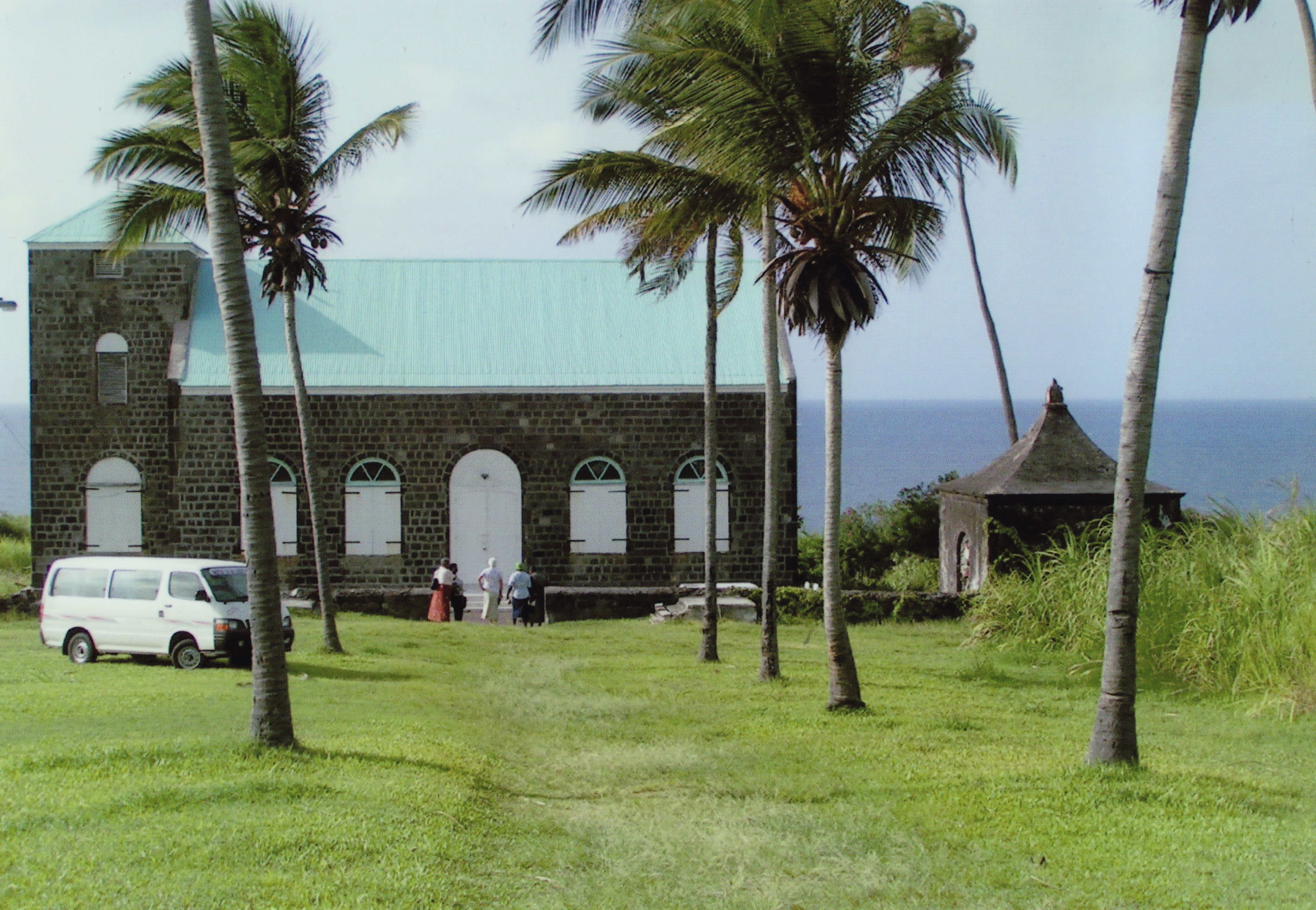
A few years ago, another friend (now, alas also late friend), the Reverend David Williams, went to the parish of St John Capisterre on St Kitts, as a stand-in for the regular rector. He took photographs of the church and the congregation, but even more remarkably, he photocopied some baptismal and marriage registers from St John’s and also from the sister church of St Paul from 1826 and 1830. (As you can see, they’re not in a good condition, but they’re still just about legible.)


 By this time Ramsay was long dead (1789), the slave trade had been abolished (1807), Wilberforce had retired from Parliament (1825), and since 1823 pressure had been building up to end the institution of slavery itself. The records show that Ramsay’s successor, the Revd. J. J. Kerie, was busy baptising slaves and conducting marriages. Most of the enslaved people made their mark rather than signing their names, but this was perfectly valid legally. The fact that they couldn’t sign their names isn’t necessarily evidence that they were illiterate, as reading and writing were taught separately.
In baptising and marrying the slaves, Kerie was granting them an autonomy and human dignity otherwise denied them. For this reason, many planters forbade slave marriages and baptisms. Below is a photograph of the church – not the original building, I imagine, but its successor, attended by a lively congregation, no doubt the descendants of the enslaved people baptised and married by Ramsay and Kerie.
 Wilberforce
Thank-you so much for this invaluable information. I am a descendent of people from this parish who were enslaved in St Kitts.
Oral family history connects us to the Kerie family, as the Rev John Julius Kerie had two brothers who had children with enslaved women whom they never officially recognised. I found the Rev Kerie’s return of the two churches in the National archives and appreciated his evident sympathetic actions towards his congregation demonstrating a more compassionate relationship with the enslaved population in teaching them to read and write.
Would it be possible to access the records you mention in this article?
Deer Kim (if I may)
I was very pleased to get your message. It was most interesting to learn of your family history. The records I quote were photocopied by my late friend, the Rev David Williams, when he was in St Kitts. He said there were a lot more but unfortunately they weren’t being looked after very well, and the climate wasn’t very kind to them.
David has since died, but I’ll get in touch with his widow, and ask her if she still has the papers. I’ll let you know as soon as I have any information.
Thank you so much Anne,
I really appreciate your getting back to me so quickly and I’m excited by the possibility there may be more information to glean. It is a great shame that historical neglect and the damage caused by climate and pests has resulted in the loss of many Caribbean records. I was lucky enough to find some miscellaneous documents by chance in the National archives. There is a very good family history website collating some of the Kerie family records which I’m happy to share with anyone else researching the family.
I read some of your blog articles on the Wilberforce family and abolition. It’s a period of history I’m currently researching and I love the way you bring the period alive in exploring the interconnected nature of members of society at the time. We often consider individuals in isolation and I’ve long wanted to contextualise their lives better. Take a look I their libraries, find a dinner guest list or letters to friends.
I look forward to reading your book and hearing from you again if anything materialises.
Hi, again, Kim. I’ve now heard from Wendy Williams, David’s widow. She’s in France at present but when she gets back, she’ll look and see what material she has, though I think it will be mainly photographs. I imagine the original documents will still be with the church, so if you haven’t done so already it might be a good idea to get in touch with them.
Your website sounds really interesting – could you send me the link? I’m not writing any more books and the website is inactive though I’ve kept it going for interest, but I teach the slave trade and its abolition for adult classes and I think people would be very interested in your family story.
I’ll let you know if I have any more info.
Anne
Hi Anne, I haven’t yet been able to find out how to contact the church.
The website is the kings candlesticks . It is not mine I’ve only contributed the transcript of a document. I’ve found lots of very useful information for family research by reading through some of the wills and gained an insight into the times.
I haven’t progressed far enough to prove our lineage from the Kerie family. What we know comes from oral histories passed down a couple of generations but I’d be happy to share whatever might be of interest.
Hi, Kim
I’ve heard back from Wendy Williams, who was at St Kitts with her husband. She tells me that the documents were in a large plastic container under debris in the study at St Paulâs rectory! She adds that she’d like to think there might be an island archive somewhere now⦠they seemed v unloved! She can send you more photos if you’d be interested.
Unless the records have been destroyed, which would be an awful thought, they must be somewhere on the island. Perhaps even in a proper archive. Worth investigating?
Best wishes
Anne
Dear Anne,
Please thank Wendy Williams for me. I would love to have any photos she can supply. I am a member of four groups of St Kitts family researchers with members in the UK and Americas including St Kitts. I should be able to write to one of my cousins on the island who knows the archivist and find out about where these records might be now. Can you tell me when David and Wendy Williams were there?
I have already shared your blog with some of my fellow researchers. It’s exciting to have access to original records and I have recognised family names relating to some of the group members. I’ll keep you posted!
Warm wishes
Kim
(I sent this on the blog, but just in case it didn’t get to you I’m sending it again.)
Hi, again, Kim. I’ve been in touch with Wendy again and she says if you’d like the originals of the documents she photocopied, you’re more than welcome to them. She says she hasn’t touched them since 2006 and is delighted at the thought that they might be going to a good home.
She has given me permission to let you have her email, so if you email me at annemstott@gmail.com, I’ll let you have it.
Best wishes
Anne
Hi, again, Kim. I’ve been in touch with Wendy again and she says if you’d like the originals of the documents she photocopied, you’re more than welcome to them. She says she hasn’t touched them since 2006 and is delighted at the thought that they might be going to a good home.
She has given me permission to let you have her email, so if you email me at annemstott@gmail.com, I’ll let you have it.