Review in Contemporary Review

I’ve come across a nice review of the book in the September issue of Contemporary Review. The author, James Munson writes

‘this is an excellent and much-needed corrective that does much to explain the ethos of the “Victorian era” and to show that Evangelicals were not the caricatured kill-joys but one of this country’s greatest achievements. The scholarship is exact, balanced and illuminating.’

Review in History Today

I was delighted to get a very favourable review in the November issue of History Today.  See here. The reviewer, Dr Ian Bradley, is a noted expert on the Clapham Sect so his positive comments are extremely welcome.  i’m delighted to say that he agrees with my argument that ‘Wilberforce’s spirituality was both distinctively evangelical and part of the same late-Enlightenment culture that created Goethe’s Sorrows of Young Werther’. It is equally gratifying when he writes that the book captures the Clapham legacy ‘beautifully and sensitively’.

Painting: The Wimbledon Wilberforces: their Portrait and their House

In Chapter 1, ‘The Merchants’ Children’, I describe how important emotionally Uncle William (1721-77) and Aunt Hannah (née Thornton; d. 1788) Wilberforce – the Wimbledon Wilberforces – were for the young Wilberforce. A fine portrait in oils of William and Hannah, c. 1750, by Joseph Highmore (1692-1780) may be seen at the Wilberforce House Museum in Hull, and can be viewed online as part of the BBC’s ‘Your Paintings’ Project. When taken out of their care, the distraught 12-year old boy wrote in a letter that he would give anything in the world to be with them again.  [Bodleian Library, MS Wilberforce, c. 51, of. 100]

The Wimbledon Guardian has a very interesting article on the elder Wilberforces’ house, known to them as Laurel Grove but subsequently named Lauriston House off Wimbledon Common, Southside. Here is an extract from the article:

‘When [the house] was demolished in 1957, a priceless ceiling painted by the famous Swiss Neoclassical artist Angelica Kauffmann (1741-1807)) was lost forever.

The house had also been the home of the anti-slavery campaigner William Wilberforce.

Originally known as Laurel Grove, Lauriston House was built in 1724 for William Jackson.

It was set in three acres and next to four cottages pre-dating 1684 which became the stable block. Jackson’s widow sold the house in 1752 to Wilberforce’s uncle. He commissioned Kauffman to paint magnificent murals for the main stairwell and in 1782 his famous nephew moved in to enjoy them.

Wilberforce’s friend, William Pitt the Younger, was then Chancellor of the Exchequer and about to become Prime Minister. He became a regular visitor…

Wilberforce left the house in 1786 and launched his long anti-slavery campaign the next year but Pitt continued to visit Wimbledon regularly as his Cabinet colleagues Richard Grenville and Henry Dundas also lived nearby, respectively in Eagle House and what later became Cannizaro House.’

Wilberforce left the house following his evangelical conversion. He wanted to move nearer to the House of Commons in order to be a more effective MP. For his country retreat, he now used the Clapham home of the wealthy merchant, John Thornton. Its demolition is a typical example of post-war vandalism.

A Link with the French Revolution

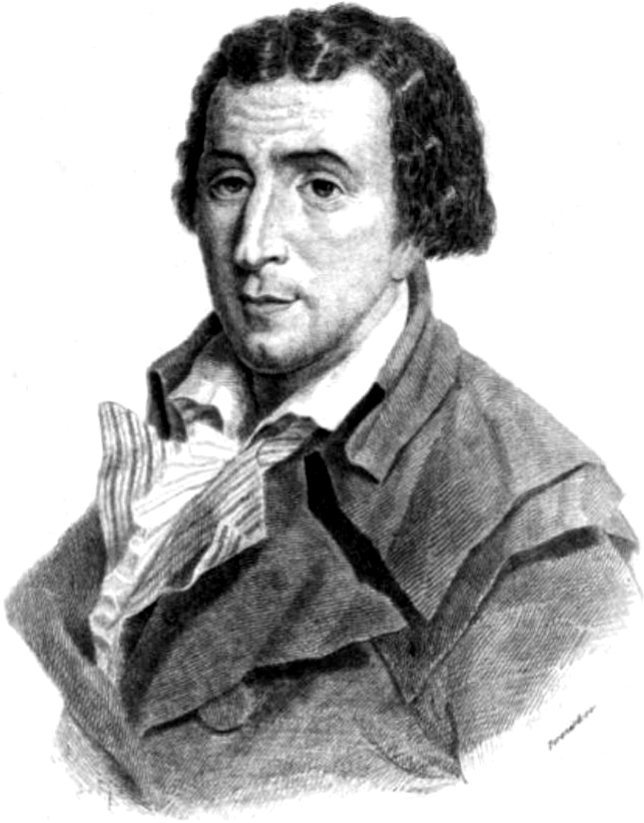
Wilberforce’s friend Hannah More also had an intriguing personal connection with the French Revolution. As she told her friend Eva Garrick, widow of the great actor-manager, David Garrick, in the early years of the Revolution, two French sisters had been teachers at the school in Park Street, Bristol, run by More’s sisters. The young women were ardent revolutionaries. (See Anne Stott, Hannah More. The First Victorian, Oxford, 2004, p. 151.) When one of them, Félicité Dupont, left the school and returned to France, she married , Jacques-Pierre Brissot. Brissot subsequently became the leader of the moderate Girondin faction in the revolutionary Convention, and he was guillotined in October 1793 (the same month as Marie Antoinette).  I wonder if any French scholars are aware of the relevant letter in the Folger Shakespeare Library, Washington DC (W.b.487, fo. 87, Hannah More to Eva Garrick, 21 November 1793), which shows Félicité’s links with Bristol.

Portrait of Henry Sykes Thornton

This painting of Henry Sykes Thornton (1800-81), the banker son and heir of Wilberforce’s friend and second cousin, Henry Thornton, was wrongly ascribed to John Hoppner and sold as such to its present owner, His Honour Judge Richard Hone, QC. However, research points the finger pretty strongly at Sir William Beechey (1753 – 1839), a fine English portraitist who worked between the 1770s and 1830s. Famous portraits by Beechey include those of the royal family, such as Queen Charlotte, as well as portraits of Lord Nelson, John Kemble, and Sarah Siddons, among many others.

Four lines of evidence suggest that the portrait may also have been by Beechey:

(1) Style: other portraits of men known to be by Beechey are identical in style and format with the Henry Sykes Thornton portrait.  For example, his early self-portrait is likewise remarkably similar:

(2) Links with Banking Families: Beechey is known to have painted the portraits of a number of people associated with important banking families, witness his fine portrait of Thomas Coutts.  Beechey could thus well have been the artist of choice for the bankers of the Thornton family, and for a young man just entering into the banking profession. [There is also a link with the Royal Bank of Scotland, which is the final successor of the Thornton bank.]

(3) Submissions to the Royal Academy: there exists an important monograph on Beechey and his submissions to the Royal Academy by W. Roberts, entitled ‘Sir William Beechey, R.A.’,  which was published in London (1907), and which includes Beechey’s account books and a list of works exhibited during his lifetime.

(4) Sobriety: Beechey’s portraiture is often described as being relatively sober, surely a characteristic which would have much attracted the son of of a leading Evangelical banking family.

Further work is now clearly required, both at the National Portrait Gallery and in the  remarkable Witt Library at the Courtauld Institute of Art.

Another review – a nice one this time!

Canon David Isherwood, the rector of Holy Trinity Clapham, and therefore the successor of John Venn and William Dealtry, has published a review of my book  in the Clapham Society’s newsletter. David has many kind comments to make, but what I especially like is the way he clearly understands what I was trying to say. I’m pleased he enjoyed it.

As it isn’t easy to access online I’m reproducing his review here:

Wilberforce, Family and Friends by Anne Stott
In 2004 Anne Stott’s biography of the evangelical philanthropist Hannah More, was published to critical acclaim, winning the Rose Mary Crawshay prize for literary biography. And hard on its heels (in literary terms anyway) comes another fascinating book on the life of Wilberforce, Family and Friends. Both books are published by Oxford University Press and were launched at Holy Trinity Clapham, the spiritual home of the Clapham Sect.

Anne has published widely on women and evangelicalism, which makes her latest book all the more fascinating because most of the books on my bookshelves about the slave trade and its abolition have been written by men. By contrast, Dr Stott’s biographical insights bring to the foreground the women who managed themselves, and the families of high profile public figureheads in the 18th and 19th centuries and draws extensively on diarised records of what makes families tick in any generation – incidental and sometimes consequential asides, preoccupations and relationships which add a rich texture to otherwise complicated but significant public figures. Relationships between spouses, the joys and anxieties of child rearing, domestic ideology, women and gender, sexuality and intimacy are explored with great insight and sensitivity over 16 chapters covering the abolitionists; love, marriage and their consequences; family life in Clapham and the sometimes difficult and strained relationships between a father and his progeny.

Anne’s thoroughly well researched references and notes make this account of Clapham’s most significant resident and the network of domestic relationship which earthed his pursuit of great causes, a thoroughly good read, casting light on the crucial significance of Wilberforce’s closest friends and acquaintances. In the end, I was left with a more sympathetic impression of those who for too long have lurked in the shadows of this famous man. Summer’s coming and time, like my forebears here, to pour something like a decent cup of tea (no sugar) and settle down to an entertaining and edifying read.

Canon David Isherwood


Some Thoughts on Marie Antoinette

This is a rather tenuous link with Wilberforce!  His friend and second cousin, Henry Thornton, saw Marie Antoinette when he was a child (many middle-class British families visited Versailles), but otherwise no member of the Clapham Sect had any contact with her. But of course they followed the events of the French Revolution with obsessive interest and saw them as an awful warning about what could happen in Britain.

As a woman, Wilberforce’s friend, Hannah More, seems to have been especially shocked at the Queen’s fate. Linda Colley (Britons. Forging the Nation, Yale, 1992) has pointed out that for many women in Britain her cruel treatment seemed like a prologned and public rape. Following Marie Antoinette’s execution, More speculated correctly that the next royal victim would be Louis XVI’s sister, Madame Elisabeth.

Marie Antoinette’s story adds period background to the concerns of the Clapham Sect and throws interesting light on how gender operated in the late 18th century and today. So here is the essence of a talk I have given to Open University Summer Schools and to Workers’ Educational Association Day Schools.

To start with, was Marie Antoinette the Diana of her age? What do they have in common? Continue reading

Enlightenment, Romanticism and Sentiment: William Wilberforce, religious conversion and the language of abolition

This is the substance of a paper I gave at the Institute of Historical Research, University of London, in January 2010. The following works are referred to in the paper:

D. W. Bebbington, Evangelicalism in Modern Britain: A History from the 1730s to the 1980s (London: Unwin Hyman, 1989)

Boyd Hilton, The Age of Atonement: The Influence of Evangelicalism on Social and Economic Thought (Oxford: Clarendon Press, 1991)

Brycchan Carey, British Abolitionism and the Rhetoric of Sensibility: Writing, Sentiment and Slavery, 1760-1807 (Basingstoke: Palgrave Macmillan, 2005)

William Cobbett, The Parliamentary History of England from the Earliest Period to the Year 1803, vol. 28 (1789-91)

D. Bruce Hindmarsh, John Newton and the English Evangelical Tradition (Grand Rapids, Michigan: Eerdmans, 2001)

D. Bruce Hindmarsh, The Evangelical Conversion Narrative: Spiritual Autobiography in Early Modern England (Oxford: Oxford University Press, 2005)

Richard Holmes, The Age of Wonder: How the Romantic Generation Discovered the Beauty and Terror of Science (London: HarperPress, 2009)

John Locke, Essay on Human Understanding (1690)

David Newsome, The Parting of Friends: A Study of the Wilberforces and Henry Manning (London: John Murray, 1966)

Mungo Park, Travels in the Interior Districts of Africa (Ware, Herts.: Wordsworth Classics, 2002)

John Pollock, Wilberforce (London: Constable, 1977)

Adam Smith, Theory of Moral Sentiments (1759)

Robert Isaac and Samuel Wilberforce, The Life of William Wilberforce, 5 vols (1838)

William Wilberforce, A Practical View of the Religious System of Professed Christians…Contrasted with Real Christianity (1797)

William Wilberforce, Letter to the Freeholders of Yorkshire on the Abolition of the Slave Trade (1807)

William Wilberforce, An Appeal to the Religion, Justice, and Humanity of the Inhabitants of the British Empire in Behalf of the Negro Slaves in the West Indies (1823)

John Wolffe, Religion, Exploration and Slavery: From Enlightenment to Romanticism (Milton Keynes: Open University, 2004)

The starting-point for this paper is John Pollock’s description of William Wilberforce’s famous conversion experience of 1785, which he describes (p. 37) in essentialist and vertical terms as part of a classic Christian experience of ‘darkness preceding dawn’ that was shared by Augustine, Luther, Cromwell, Pascal, and Bunyan.  One of the reviewers took Pollock to task for this, arguing that Wilberforce’s conversion should be seen horizontally as a classic product of the late eighteenth-century age of sentiment, the age that produced Sterne’s Sentimental Journey (1768) and Goethe’s Sorrows of Young Werther (1774) and it is Wilberforce’s alleged relationship with late eighteenth-century sentimentalism that I want to explore here.

In order to do this, it is necessary to revisit David Bebbington’s  well known thesis that the eighteenth-century Evangelical revival ‘represents a sharp discontinuity in the English-speaking world, the transition from the Baroque era to the Enlightenment’ (p. 74) and that the whole movement ‘was permeated by Enlightenment influences’ (p. 57).  This assertion has been taken up by many other historians of Evangelicalism, for example in John Wolffe’s at first sight startlingly counter-intuitive assertion (p. 15)  that John Newton’s hymn ‘Amazing Grace’ ‘was in its way quite as much a product of the Enlightenment as Hume’s ‘Of the immortality of the soul’.  Both  Bebbington and Wolffe associate Evangelicalism  with John Locke’s empiricist philosophy.  As Wolffe notes,

‘Evangelicals were men and women of the Enlightenment to the extent that they perceived themselves as advocates of a coherent alternative religious system founded on tested experience and an integrated view of the world’ (p.18).

Continue reading

Wilberforce and Bath: two love stories

This is an amended version of a talk I gave in Bath in the spring of 2007, as part of the commemorations of the bicentenary of the abolition of the slave trade. For copyright reasons I have not quoted directly from Wilberforce’s journals or any other manuscripts. The full quotations and the references can be found in my book.

My photograph of the Georgian House, Bristol, home of Charles Pinney, the slave-owning merchant who became engaged to Elizabeth Wilberforce

I didn’t realize until I did a word search how often Bath crops up in Wilberforce’s correspondence! Because of his very indifferent health he was frequently in the town even though he complained on 20 April 1826 that Bath was one of the worst possible places for finding any leisure in the morning, because the door knocker was continuously going. That sociable city was not the place for quiet reflection or sustained reading.

The first record I have found dates from November 1786, when he was in his late twenties, where his diary records that when in Bath he gave way to what he called ‘intemperance’. I’m not sure that should mean that he was drunk! This was the period of his evangelical conversion and he was very hard on himself for any lapses from high standards. Two years later, he went to Bath again so sick that many thought he was dying. He recovered, but his illness meant that his parliamentary motion for the abolition of the slave trade had to be delayed for a year; it took place in May 1789 rather than in 1788 as had been planned.

In 1811 he bought an estate at West Wick between Bath and Bristol, though as an investment rather than a place of residence. By this time he was a married man, the father of six children. He had met his wife at Bath and they were married at Walcot church, the same church where Jane Austen’s parents had been married. So this is the first love story I am going to tell. The second – a less happy one – relates to his younger daughter, Elizabeth.

For most of the 1790s Wilberforce was urgently – at times frantically and often irrationally – looking for a wife. Yet to many observers he seemed the epitome of the confirmed bachelor. Certainly that is how Dorothy Wordsworth saw him. What woman would be expected to keep up with his frantic and disorganized life?

Wilberforce’s quest for a wife was inspired by two strong forces working within him: his sexual needs that could only be legitimately satisfied in marriage, and a wistful envy when he saw the happy marriages of his friends. Those who knew him well quickly picked up on his need for domestic companionship and were keen to offer advice. The clinching piece of advice was to be provided by his close friend, Thomas Babington, MP for Leicester and a fellow Evangelical.

Early in 1797 Wilberforce completed his book A Practical View of the Prevailing Religious System of Professed Christians … Contrasted with Real Christianity. On 12 April he set off for Bath and the following day a triumphant Babington told him he had found him a wife: a Miss Barbara Ann Spooner, twenty-five years old (not twenty as many of Wilberforce’s biographers state), and the eldest daughter of the Birmingham merchant, Isaac Spooner. The family spent a great deal of time in Bath because of Isaac’s health. The Spooners owned Elmdon Hall in Warwickshire (now in the suburb of Edgbaston). They were well-to-do but the family was large and Barbara’s fortune was the relatively modest one of £5,000. But money was never a consideration for Wilberforce. Nowhere in his journals does he show any particular interest in how much money his putative bride would bring him. He had two criteria, neither of them negotiable: she had to share his Evangelical convictions and she had to be ‘affectionate’. (This was a man who craved affection more than anything else.) As it happened Barbara Spooner was to pass on both counts. She was also, as her surviving portrait shows, extremely attractive with dark hair and expressive eyes. The couple met on Saturday 15 April (unfortunately we don’t know where), and at the end of the day Wilberforce felt he had been gauche and came away ‘irritated and sad’. The following day was Easter Sunday and during a not very impressive sermon his mind was distracted by Miss Spooner. He was, he recognized, in danger of falling in love with a creature of his own imagination. He dined with Babington and the Spooners in the evening and was convinced that he was in love.  So blatant were his attentions that the following evening he found Barbara ‘irritated’ as his attentions were now ‘public news’ in Bath.  The city, it seemed, was alive with gossip that Wilberforce was in love with a woman he had met two days previously. For this rest of the week the couple were seen in public at the Pump Room and by the Saturday Wilberforce could describe himself as ‘captivated’ by her’. True to his usual practice he consulted friends, this time Hannah More and his second cousin Henry Thornton, who understandably advised him to slow down. But he thought they were ‘imperfect judges’.  Of course they were both seriously alarmed. What was to become of the great causes of evangelicalism and abolition if their foremost proponent made a public fool of himself?

On Monday 24 April, nine days after meeting Barbara, Wilberforce had the necessary interview with Mr Spooner, and the following day he made his engagement public by escorting her to the Pump Room. He now had leisure to assess his fiancée’s character. He thought her ‘good’ and ‘natural’, but also ‘wild’, by which he seems to have meant  spontaneous.  On the Saturday he received a message from the Prime Minister William Pitt, that he was needed in London in order to give support to a controversial loan to enable Austria to continue her war against Revolutionary France. After they had breakfasted together, he  took leave of her.  Once in London, in the grip of another bout of illness, quite possibly psychosomatic, he had time to reflect on his rash action: had he yielded to his physical appetites and entered into an irrevocable commitment? Yet he trusted that Barbara really was a child of God.

At the end of May as the time approached for him to return to Bath and his marriage, he lamented how much of his time had been frittered away. The war was going badly, the country was in dire straits, and in his heart of hearts he did not care!

At the wedding service, which took place on 30 May at Walcot church (the same church where Jane Austen’s parents had married) , it was Barbara who was tearful and Wilberforce who felt no emotion. After a courtship of six weeks, he had worn himself out mentally. Their honeymoon was spent on a tour of Hannah More’s schools in the Mendips.

The couple returned to Bath later in the year and according to my calculations, their first child, William Wilberforce junior, was conceived in Bath around 20 October. Not all his friends thought Wilberforce had made the right choice of a wife. Dorothy Wordsworth was not alone in thinking Barbara good-hearted but whiney and sanctimonious.

The criticisms can be summed up as follows: far from being worthy of her great husband, Barbara was a trial to his patience; she was incapable of stimulating conversation and in her anxious protectiveness she stifled his conversation with his friends; she possessed to an uncomfortable degree the evangelical vice of speaking in cant religious phrases. She was also incapable of running a smooth, efficient household, and at the chaotic breakfasts in the Wilberforce household, guests were expected to fend for themselves and sometimes had to be prepared to go hungry – though one doubts whether any wife could have coped easily with such a constant stream of visitors. Her children, too, found her a trial because of the way she fussed over them. Her vivid imagination found it all too easy to picture them in all sorts of dire perils, both physical and moral. For example, when she heard that her youngest son, Henry, had written home from his brother’s alone and at night, she conjured up a picture of him falling from his horse and lying injured in a ditch, his life slowly ebbing away. The children either laughed it off or gritted their teeth. Yet Wilberforce never regretted his marriage.

As a married couple, the Wilberforces visited Bath frequently, most sadly in 1821 when their elder daughter was taking the waters to cure the tuberculosis that was to kill her early in 1822. They were celebrities in the city. In 1824 the surviving daughter Elizabeth reported that people were forking out considerable sums of money to buy Barbara’s drawings.

In Bath three years later, Elizabeth  presented the family with a major crisis when she announced her wish to marry Charles Pinney, third son of the Bristol merchant, John Pinney, who was the owner of a substantial slave estate in Nevis. His youngest son Charles had been born in 1793 in the house in Great George Street now open to the public as the Georgian House. Charles inherited his father’s business skills and when John Pinney died in 1818 he inherited the Bristol house and the Nevis property – and the slaves. Some time in the mid-1820s he met the Wilberforces probably through their common friend, John Scandrett Harford, I suspect either in Bath or at nearby Blaise Castle. Whatever the location, in April 1827 the family were at no 3 Queen Square where Wilberforce was approached by Pinney who asked him for his daughter’s hand in marriage.

With what seems like astonishing naivety, Wilberforce responded sympathetically. In his letter to Pinney he discussed the possible marriage settlement but made not mention of his prospective son-in-law’s substantial interests in the West Indies or in the fact that he was also involved in granting mortgages to planters in need of funds. This was worse even than being a slave-holder as he was involved in slavery at a distance and had no control over the working conditions of the slaves.

The day after Wilberforce in effect agreed to the marriage, he received a blistering letter from his abolitionist brother-in-law, James Stephen which distressed him so much that he became ill.  Barbara suggested that the family travel to Leicestershire to consult the family oracle, Thomas Babington. A week later they set off. Of course in theory the choice rested with Elizabeth. At the age of 26 she had the legal right to make her own decision. But what could she do? After listening to Babington Elizabeth broke off the relationship. As her mother put it in an apologetic letter to Pinney’s sister, Mary Ames, she could not destroy her father’s peace of mind.  Wilberforce noted with relief in his diary that she did not seem too troubled by her decision, but the next day he had to report that she had been confined to her room all day with a headache. The crisis was over – but not without its casualties. Elizabeth’s thoughts on the subject have not survived, but it must have been an extremely depressing time for her.

I wish I could provide a happy ending for Elizabeth. In January 1831 she married a clergyman, the Rev John James of Lydney, and went to live in his poor Yorkshire parish at Rawmarsh. By this time she was already suffering from a hacking cough. In October she gave birth to a baby daughter, Barbara. She then went rapidly downhill and died in the Isle of Wight in March 1832.

By this time Wilberforce himself had not long to live. In May 1833 he was back in Bath and clearly dying. The waters seemed to be doing him good, and he was able to walk on the Parade for half an hour,  but this was a false hope. The Wilberforce family were very good at unrealistic optimism.

On 17 July Wilberforce left Bath for the last time to seek the advice of London doctors. On 26 July he heard that the Anti-Slavery bill had passed its third reading. He died at 3 am on 29 July a few weeks before his seventy-fourth birthday, and with him died most of the family’s connection with Bath. Barbara Wilberforce does not seem to have visited it often if at all after her husband’s death. But then perhaps Bath’s glory days were over?